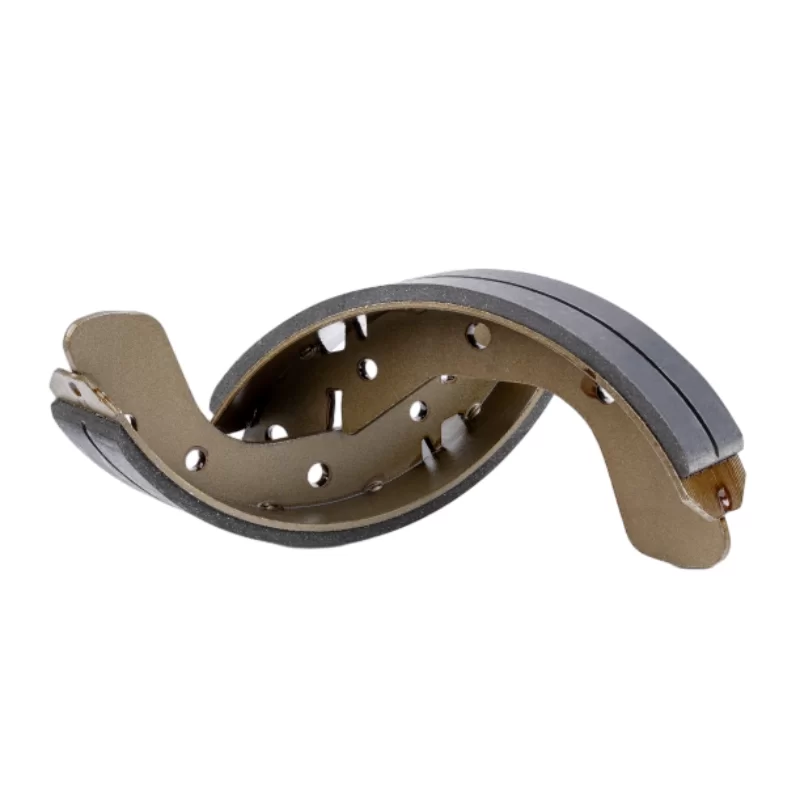
High-quality brake shoes designed to deliver superior braking performance, long service life, and reduced noise. They provide safe, smooth stopping across all driving conditions.
Our brake shoes are manufactured using advanced friction materials and precision engineering to deliver exceptional braking performance and long-lasting durability. Designed for drum brake systems, these brake shoes provide consistent stopping power, excellent heat resistance, and minimal wear—even under heavy-duty use and high-temperature conditions.
The friction lining is formulated to deliver stable braking force and superior resistance to brake fade, ensuring reliable performance during frequent braking and long descents. Each brake shoe undergoes rigorous quality checks to support safe, consistent performance, with fit and compatibility across a wide range of vehicles, including passenger cars, light trucks, and commercial vehicles.
In addition to strong braking performance, our brake shoes are environmentally responsible and 100% asbestos-free, helping reduce dust emissions and supporting cleaner operation. Suitable for both everyday urban driving and demanding applications, they help improve safety, comfort, and overall cost-effectiveness for drivers worldwide.
Reliable Stopping Power: Ensures consistent, safe braking under all operating conditions.
Durable Friction Materials: Extends service life and helps minimize maintenance requirements.
Low Noise & Dust: Advanced formulations for cleaner, quieter operation.
Perfect Fitment: OEM-standard design for seamless installation.
Eco-Friendly: Asbestos-free and aligned with global environmental expectations.
Stable Friction Coefficient: Delivers predictable braking across varying speeds and loads.
High Heat Resistance: Helps prevent brake fade during repeated use and heavy braking.
Enhanced Wear Resistance: Helps protect the drum surface and supports a longer shoe service life.
Quiet Braking: Minimizes squeal and vibration for a smoother driving experience.
Our brake shoes are ideal for:
Passenger vehicles and SUVs equipped with drum brake systems.
Light commercial trucks and vans that require reliable performance under load.
Heavy-duty applications such as trailers and agricultural machinery.
OEM replacement and aftermarket solutions for global markets.
Brake Shoes Are Made of Which Material?
Brake shoes are critical components in drum brake systems, providing the friction required to stop a vehicle safely. The materials used in their construction directly influence braking performance, durability, and noise levels. Modern brake shoes typically combine a robust backing plate with specialized friction linings designed to withstand high temperatures and repeated stress.
Steel Backing Plate
The core of a brake shoe is a heavy-duty steel plate. This rigid foundation helps maintain structural integrity and ensures the shoe retains its shape under high braking forces. The steel backing also supports heat dissipation and provides a secure base for the friction material bonded to its surface.
Friction Lining Materials
The outer layer — the part that contacts the brake drum — is made from high-friction composite materials. While asbestos was historically used due to its heat resistance, health concerns have led to safer alternatives such as:
Semi-Metallic Linings: A mixture of steel fibers, iron powder, and graphite provides strong heat conductivity and high strength. These linings are durable and suitable for heavy-duty or higher-speed applications.
Organic (Non-Asbestos) Linings: Made from fibers such as aramid and glass, combined with rubber and resin binders, these linings deliver quiet operation and help reduce drum wear—making them well-suited to passenger vehicles.
Ceramic Linings: Incorporating ceramic fibers and non-ferrous fillers, these linings resist fade at high temperatures, help reduce dust, and support smooth, consistent braking.
Bonding Process
The friction material is secured to the steel backing plate either by riveting or by bonding using high-temperature adhesives or mechanical fasteners to ensure a secure fit.
In summary, brake shoes are primarily constructed using a steel backing plate combined with semi-metallic, organic, or ceramic friction linings—balancing strength, heat resistance, and dependable braking performance across a wide range of vehicle types and operating conditions.
Types of Brake Shoes
Brake shoes are essential components of drum brake systems, creating the friction required to slow down or stop a vehicle safely. They consist of a strong steel backing plate with a bonded or riveted friction lining. Depending on design, performance requirements, and application, brake shoes can be classified into several main types—each offering advantages for specific vehicles and driving conditions.
1. Leading and Trailing Shoe
This is the most common configuration in drum brakes. The leading shoe faces the direction of drum rotation and provides most of the braking force, while the trailing shoe follows behind and helps stabilize braking action. Together, they deliver balanced performance for everyday passenger cars and light trucks.
2. Duo-Servo Brake Shoe
Duo-servo systems use two primary shoes connected by an adjuster, allowing both shoes to act as leading shoes during braking. This design generates higher braking torque, making it suitable for heavy-duty trucks, buses, and commercial vehicles that require strong stopping power.
3. Primary and Secondary Shoe
In some drum brake setups, the primary shoe (front shoe) has a shorter lining that engages first, while the secondary shoe (rear shoe) has a longer lining that provides greater friction. This arrangement improves braking efficiency and helps reduce wear.
4. Parking or Handbrake Shoe
These shoes are specially designed for parking brake systems. They maintain firm holding force when the vehicle is stationary. They are commonly used in rear drum assemblies or integrated within disc brake systems for emergency braking functions.
Brake shoes may also be customized with semi-metallic, ceramic, or organic friction linings to suit different temperature ranges and noise requirements. Selecting the correct type helps ensure optimal stopping performance, extended drum life, and improved driving safety across various automotive and industrial applications.
Brake Shoe Function
A brake shoe is a crucial component of a drum brake system, responsible for generating the friction needed to slow down or stop a vehicle. It is typically built with a sturdy steel backing plate and a high-friction lining bonded or riveted to the outer surface. Together, these components enable reliable braking performance across a range of driving conditions.
Core Function
When the brake pedal is pressed, hydraulic pressure from the master cylinder pushes the wheel cylinder pistons outward. This action forces the brake shoes against the inner surface of the rotating brake drum. The friction lining contacts the drum, converting the vehicle’s kinetic energy into heat and slowing wheel rotation until the vehicle comes to a stop.
Energy Conversion
The primary function of a brake shoe is to convert motion into heat through friction. High-quality friction linings—whether semi-metallic, ceramic, or organic—are designed to withstand extreme temperatures and maintain consistent stopping power without fade.
Support and Stability
The steel backing plate provides the strength needed to resist deformation during repeated braking. It also helps distribute pressure evenly across the drum, supporting smooth, stable deceleration and extending the service life of both the shoe and the drum.
Additional Roles
Brake shoes also play an important role in parking or emergency braking. When engaged, they hold the drum securely to help prevent vehicle movement, including on inclines.
In summary, the brake shoe’s primary function is to create friction against the brake drum to slow down or stop the vehicle, while maintaining durability and heat resistance. High-quality brake shoes improve safety, reduce wear on the drum, and provide dependable braking performance for passenger cars, commercial trucks, and industrial vehicles alike.