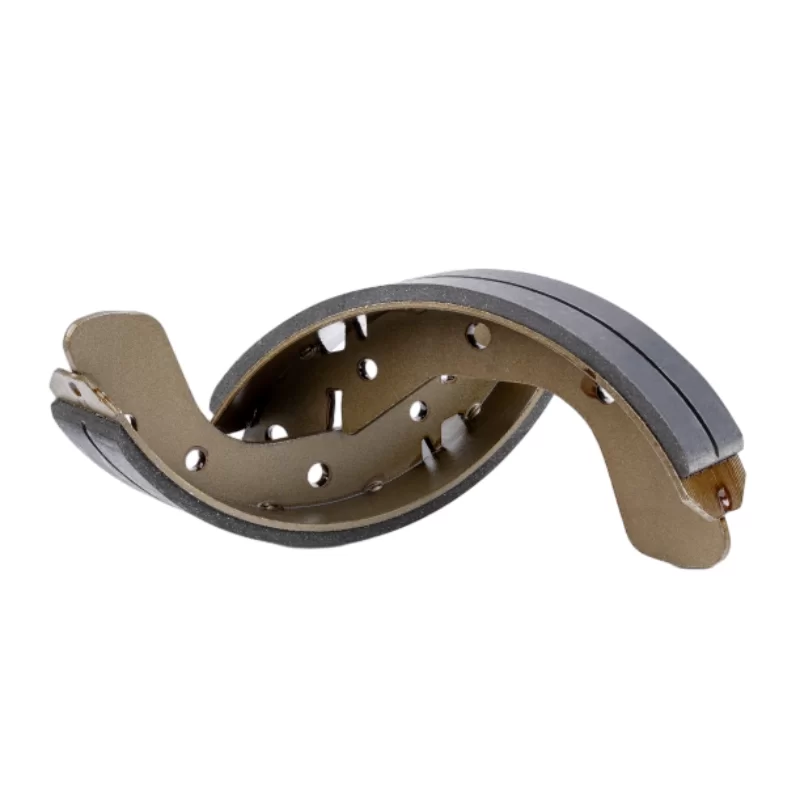
Parking Brake Shoes Technical Performance Analysis
A vehicle's safety depends not only on its ability to stop while moving but also on its capacity to remain stationary on uneven terrain. While disc brakes dominate the primary stopping process in modern cars, the secondary system—specifically the drum-based parking mechanism—remains a critical safety pillar.
The efficiency of this system relies heavily on the friction interface between the drum and the lining. Over time, thermal stress, road debris, and natural wear degrade the surface of the shoes, leading to "brake creep" or a complete failure to hold the vehicle's weight, which poses significant risks in industrial and urban environments.
Maintaining these components involves more than just periodic checks; it requires selecting materials that balance friction coefficients with environmental durability. Understanding the technical nuances of parking brake shoes is essential for fleet managers and automotive technicians ensuring long-term operational safety.
Drum Brake Fundamentals in Parking Systems
Unlike service brakes that manage kinetic energy during deceleration, parking brakes are designed to provide a static hold. This is achieved by forcing the brake shoes outward against the inner surface of the brake drum, creating a high-friction lock that prevents wheel rotation.
The mechanical integrity of the backing plate—typically constructed from heavy-duty industrial steel—is what allows the system to withstand the immense pressure required to keep a multi-ton vehicle immobile on a slope. Any deformation in this steel plate can lead to uneven shoe contact and reduced holding power.
Material Science of Friction Linings
The choice of lining material directly determines the longevity and reliability of the braking system. Semi-metallic linings are often preferred for heavy-duty commercial vehicles due to their exceptional heat conductivity and resistance to wear, whereas ceramic and organic composites are utilized in passenger cars to reduce noise and dust.
A critical technical requirement in modern manufacturing is the elimination of asbestos. Asbestos-free formulations utilize advanced composites that replicate the friction properties of traditional materials without the associated health risks or environmental toxicity. This transition has required a complete redesign of the binder resins used to hold the friction particles together.
Precision in the friction coefficient is paramount. If the coefficient is too low, the vehicle may slip; if it is too high, the shoes may "grab" aggressively or wear down the brake drum prematurely. Achieving a stable coefficient across various temperatures is the primary goal of current R&D in the automotive components sector.
Mechanical Design and Fitment Logic
OEM-standard fitment is not merely about size, but about the precise alignment of the shoe within the drum. Even a millimeter of deviation can result in "shoe chatter" or uneven wear patterns that compromise the safety of the vehicle.
Consistent braking force is achieved through the synergy of a rigid steel backing plate and a seamlessly bonded friction lining, ensuring that force is distributed evenly across the entire contact surface of the drum.
Installation methods also vary based on the application. Riveted installations are common for their structural permanence and resistance to heat-induced peeling, while bonded linings offer a smoother surface finish and are often used in light-duty applications where noise reduction is a priority.
Performance Metrics and Thermal Stability
Thermal fade occurs when the friction material overheats, causing a drop in the coefficient of friction. While parking brakes are not used for continuous braking, they often endure high temperatures after a long descent where the primary service brakes have generated immense heat.
High-performance shoes are engineered with thermal stability in mind, using materials that maintain their structural integrity even when exposed to extreme heat. This prevents the "glazing" effect, where the lining surface becomes smooth and glass-like, drastically reducing the shoe's ability to grip the drum.
Figure 2. Comparative Stability Index of Friction Materials
Application Scenarios and Wear Factors
In urban commuting, the primary wear factor is frequent, short-duration engagement and exposure to moisture and road salts, which can cause surface oxidation on the steel backing plate. For these scenarios, low-dust, organic-based linings are preferred to maintain rim cleanliness and reduce noise pollution.
Conversely, in industrial settings—such as for light trucks or commercial delivery fleets—the shoes must withstand heavy-duty loads and repeated use on steep gradients. In these cases, Duo-Servo designs are often employed to increase braking torque and dissipate heat more effectively, ensuring the vehicle remains anchored regardless of the cargo weight.
The Shift Toward Eco-Friendly Composites
The automotive industry is undergoing a transition toward "green braking." This involves not only the removal of asbestos but also the reduction of heavy metal content, such as copper, which can leach into the environment through brake dust.
Hengshui Kaiyuan Auto Parts Co., Ltd. focuses on this evolution by developing low-metal and ceramic-based eco-linings. These materials are engineered to meet global environmental standards while maintaining the friction levels necessary for safety.
The challenge for manufacturers is to ensure that these eco-friendly materials do not sacrifice durability. Through rigorous heat stress tests and CNC-precision engineering, it is now possible to produce shoes that are both environmentally sustainable and capable of exceeding original equipment specifications.
Evaluating Replacement Options
Choosing the right replacement shoe requires a balance between the vehicle's operational requirements and the desired service life. For high-mileage commercial fleets, the focus should be on wear resistance and thermal stability.
Technicians must also distinguish between leading and trailing shoes in specific drum configurations. Leading shoes generally provide the primary stopping force, while trailing shoes offer stability. Installing the wrong type can lead to abnormal wear and inconsistent holding power.
Ultimately, the investment return on high-performance shoes is realized through reduced maintenance frequency and extended drum life, as advanced formulations are designed to balance friction without aggressively scouring the drum surface.
| Material Type | Friction Stability | Wear Resistance | Best Application |
|---|---|---|---|
| Organic | Moderate | Low | Urban Passenger Cars |
| Semi-Metallic | High | High | Light Trucks / SUVs |
| Ceramic | Very High | Moderate | Premium Passenger Vehicles |
| Eco-Composite | High | Moderate | Global Fleet Standards |
| Asbestos-Based | Moderate | Moderate | Obsolete / Non-Compliant |
| High-Perf Steel | Extreme | Extreme | Heavy Industrial Loads |
Questions & Answers
In a drum brake system, the leading shoe is the one that is pushed into the drum by the rotation of the drum itself, enhancing its braking force through a self-energizing effect. The trailing shoe moves away from the direction of rotation, providing stability and balancing the braking force. Using OEM-standard shoes ensures that these specific geometric roles are maintained for maximum efficiency.
Modern asbestos-free linings utilize ceramic, organic, and semi-metallic composites that match or exceed the friction properties of old asbestos materials. They offer better thermal stability and are significantly safer for installers and the environment, without sacrificing the stopping power or holding capacity of the parking brake.
Yes. Lower-quality shoes often have inconsistent hardness or contain abrasive particles that "score" or gouge the drum surface. High-performance linings, particularly those with ceramic or advanced organic formulations, are designed to balance the friction coefficient with material softness, reducing abrasive wear on the drum and extending the overall life of the braking assembly.
Common indicators include the parking brake lever requiring more clicks than usual to engage, the vehicle drifting slightly while parked on a grade, or audible grinding noises when applying the brake. Additionally, if the braking force feels inconsistent or "spongy," it often indicates that the lining has worn down to a critical level.
Semi-metallic shoes are ideal for vehicles subject to heavy loads or high-heat environments, such as SUVs and light trucks, due to their durability. However, they can be noisier and produce more dust than ceramic or organic alternatives, making them less ideal for luxury passenger cars where noise, vibration, and harshness (NVH) levels are a primary concern.
The backing plate serves as the structural foundation. If the steel is too soft or of poor quality, it can flex under the high pressure of the parking brake engagement. This flexion leads to uneven contact between the lining and the drum, which can cause the vehicle to slip or result in uneven wear that requires more frequent replacements.
Final Thoughts
Reliable stationary stability is a non-negotiable aspect of automotive safety. From the precision of the CNC-machined backing plate to the chemical composition of asbestos-free linings, every detail in the manufacturing of parking brake shoes contributes to the prevention of vehicle roll-away accidents.
As the industry moves toward more sustainable materials and tighter OEM tolerances, the focus remains on balancing environmental responsibility with uncompromising stopping power. Investing in high-grade, thermally stable components not only enhances safety but significantly reduces the total cost of ownership for fleet and individual vehicle operators.