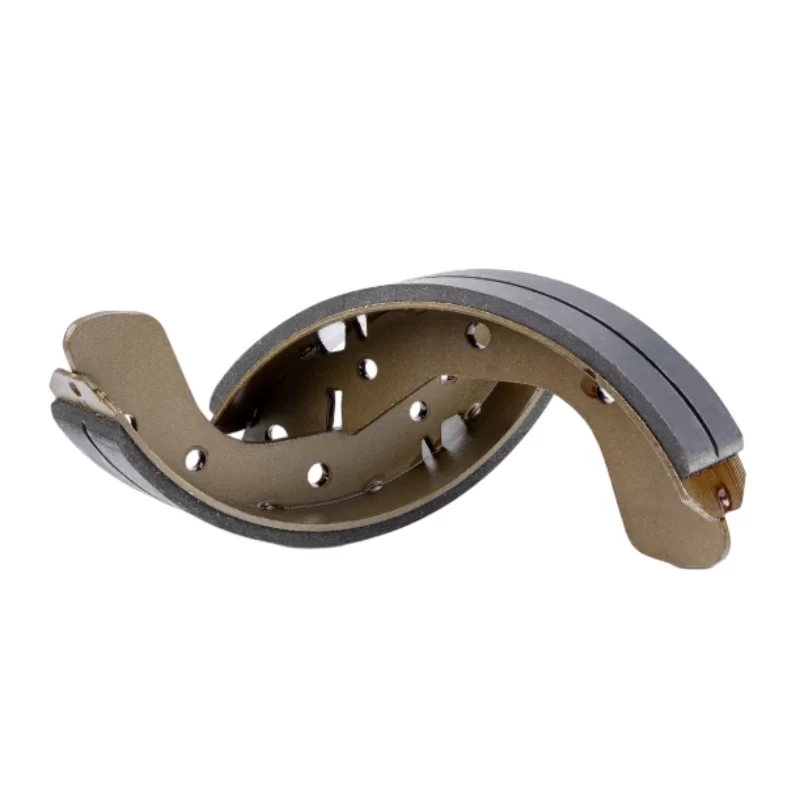
Brake Shoe Technical Architecture and Performance Analysis
Selecting the right friction components for drum brake systems often comes down to a critical balance between stopping distance and long-term wear. While disc brakes dominate front-axle applications, the rear axle in many passenger and commercial vehicles still relies on the mechanical efficiency of the drum system.
The performance of these systems is almost entirely dependent on the quality of the brake shoe, specifically the interaction between the friction lining and the drum surface. As vehicle weights increase and safety regulations tighten globally, the demand for materials that resist heat fade and minimize dust has shifted the industry toward advanced ceramic and semi-metallic composites.
This analysis examines the technical architecture of modern drum braking components, evaluating how material science and shoe configuration impact overall vehicle safety and operational costs.
Mechanical Fundamentals of Drum Braking
At its simplest, the drum brake operates by forcing a curved friction element—the shoe—outward against the inner surface of a rotating drum. This process is driven by hydraulic pressure from the master cylinder, which actuates a wheel cylinder to push the shoes apart.
The efficiency of this action depends on the coefficient of friction. A stable friction coefficient ensures that the vehicle decelerates predictably across various speeds and load weights, preventing sudden locking or insufficient stopping power.
Core Structural Components and Design
The integrity of a brake shoe relies on two primary elements: the steel backing plate and the friction lining. The backing plate provides the necessary rigid foundation to prevent deformation under high braking forces, ensuring that the pressure is distributed evenly across the drum surface.
Design configurations vary based on the required torque. For example, Leading and Trailing shoe setups are standard for passenger cars, while Duo-Servo systems are employed in heavy-duty trucks to maximize braking torque through a self-energizing effect.
Precision engineering in the bonding process—whether via high-temperature adhesives or mechanical riveting—is essential. Any separation between the lining and the plate can lead to catastrophic brake failure or uneven wear, which is why rigorous testing against international safety standards is mandatory.
The Role of Friction Material Science
The shift away from asbestos has led to the development of three primary composite types. Semi-metallic linings utilize steel fibers and iron powder for superior heat conductivity, making them ideal for heavy loads, while organic linings prioritize quiet operation and lower drum wear.
Modern braking performance is defined by the ability to manage heat. Ceramic linings represent the current gold standard, utilizing non-ferrous fillers to resist brake fade during repeated high-temperature applications.
The selection of these materials directly influences the "noise and dust" profile of the vehicle. For instance, ceramic materials significantly reduce particulate emissions and squeal, enhancing driver comfort without sacrificing the stopping distance required for safety.
Comparative Performance Indices
Evaluating the effectiveness of different friction materials requires a multi-dimensional approach. While semi-metallics excel in thermal conductivity, they often result in higher noise levels and faster drum wear compared to ceramic alternatives.
In a professional evaluation framework, we can map these materials across key performance indicators such as heat resistance, dust levels, and service life to determine the optimal fit for specific vehicle classes.
Figure 2. Material Performance Comparison Index
Application Scenarios and Vehicle Fitment
The operational requirements for a passenger SUV differ vastly from those of a commercial trailer. For light urban driving, an organic or ceramic lining is preferred for its quietness and low dust. However, in heavy-duty applications—such as agricultural machinery or long-haul trailers—the priority shifts toward extreme wear resistance and the ability to maintain a stable friction coefficient under constant load.
Hengshui Kaiyuan Auto Parts Co., Ltd. addresses these varied needs by offering a range of shoes designed for OEM replacement and aftermarket solutions. By optimizing the ventilation structure and friction formulas, these products ensure that commercial vehicles can handle heavy loads while maintaining a safe stopping distance.
Evolution of Eco-Friendly Braking Standards
Environmental regulations are fundamentally altering the composition of braking materials. The global mandate for 100% asbestos-free products is no longer a competitive advantage but a baseline requirement for market entry.
Beyond asbestos, the industry is now focusing on reducing copper and other heavy metals that contribute to urban air pollution. This has pushed manufacturers toward "green" chemistry, utilizing bio-based resins and ceramic fibers that minimize dust emissions.
The transition to eco-friendly materials must not compromise safety. The challenge lies in maintaining high heat resistance and stable friction while eliminating hazardous substances, a goal achieved through advanced precision engineering and rigorous quality control.
Selection Framework for Aftermarket Replacement
When selecting a replacement brake shoe, buyers must evaluate the trade-off between service life and immediate performance. A semi-metallic shoe may offer the best stopping power for a loaded truck, but it will wear down the drum faster than a ceramic alternative.
The suitability of a product should be evaluated against the intended driving environment. Urban commuters should prioritize noise reduction and low dust, whereas those operating in mountainous terrain or industrial sites must prioritize heat fade resistance.
The following framework provides a qualitative assessment of material suitability based on typical operational requirements.
| Material Type | Primary Advantage | Typical Application | Wear Rate (Relative) |
|---|---|---|---|
| Organic | Low Noise/Dust | Passenger Cars | Moderate |
| Semi-Metallic | High Heat Dissipation | Heavy Trucks | High (on drum) |
| Ceramic | Fade Resistance | Performance SUVs | Low |
| Hybrid Composite | Balanced Performance | Light Commercial | Moderate |
| Asbestos-Free | Eco-Compliance | Global Markets | Variable |
| OEM-Standard | Perfect Fitment | Direct Replacement | Standard |
Questions & Answers
Semi-metallic linings contain a high percentage of metal fibers, which provide excellent heat conductivity and strong stopping power, making them ideal for heavy-duty use. Ceramic linings use non-ferrous fillers that resist fading at high temperatures and produce significantly less dust and noise, making them more suitable for passenger vehicles and urban driving.
In a leading-trailing setup, one shoe provides the bulk of the braking force while the other stabilizes. A Duo-Servo system is designed so that both shoes act as leading shoes, creating a self-energizing effect that significantly increases braking torque. This is why Duo-Servo designs are primarily used in buses and commercial trucks.
Asbestos was historically used for its heat resistance, but it is a known carcinogen. Modern safety and environmental regulations globally prohibit its use. Asbestos-free linings use advanced aramid fibers, glass, and ceramic composites to achieve similar or superior thermal stability without the health risks to technicians and the environment.
Brake fade occurs when the friction material and the drum overheat, reducing the coefficient of friction and increasing the distance required to stop. It can be prevented by using materials with high heat resistance (like ceramics) and ensuring the drum has adequate cooling properties. High-quality shoes with stable friction coefficients help mitigate this risk.
Replacement is generally recommended when the friction lining is worn down to the wear indicators or if the steel backing plate is deformed. While relining is possible in some industrial contexts, replacing the entire shoe ensures OEM-standard fitment and bonding integrity, which is safer and more cost-effective for most commercial and passenger vehicles.
Parking or handbrake shoes are specifically designed to hold a vehicle stationary. While they use similar materials, their primary role is static friction. In some systems, they are integrated into the rear drum assembly, while in others, they act as an independent emergency backup to ensure the vehicle remains parked on an incline.
Final Thoughts
The effectiveness of a drum brake system is fundamentally a matter of material science and precision engineering. By matching the friction lining—whether semi-metallic, organic, or ceramic—to the specific load and temperature requirements of the vehicle, operators can significantly enhance both safety and service longevity.
As the automotive industry moves toward stricter environmental standards and higher efficiency, the role of asbestos-free, low-dust components becomes paramount. Choosing components that balance stopping power with drum protection ensures a sustainable and safe driving experience across all vehicle classes.